Beyond Helmets & Rules: The Real Discipline Behind Saving Lives on Construction Sites
From the Desk of the OHS Assurance Manager | World Day for Safety and Health at Work 2026
At BEC Arabia, safety is not treated as a priority that shifts with deadlines or pressure. It is a value that defines how decisions are made, how work is executed, and how people look out for each other every single day. Because in an environment where risks are immediate and unforgiving, safety cannot rely on procedures alone. It must live in behaviors, in leadership, and in the discipline to act correctly even when no one is watching.
This belief is supported by a strong foundation. Our operations are guided by internationally recognized frameworks such as ISO 45001 and ISO 14001, alongside a comprehensive Health & Safety Management System that integrates global standards, regulatory requirements, and industry best practices. Yet the real strength of this system is not in its structure, it is in how naturally it drives safe decision-making across all levels of the organization, I have seen firsthand how the tone set by our management, especially our CEO changes the conversation around safety. When leaders treat safety as a value, not a priority, it removes compromise from the equation.
Where Safety Becomes Real: The Three Measures That Matter Most
In a complex construction environment, not every safety effort carries the same impact. Real protection comes from focusing relentlessly on the areas that most effectively prevent harm.
1. Managing Fatal Risks Without Compromise
The first and most uncompromising focus is the control of fatal risks. Activities such as working at height, lifting operations, confined spaces, and electrical works are inherently high-risk and demand absolute discipline.
At BEC Arabia, these activities are managed through detailed risk assessments, strict permit-to-work systems, method statements, and clearly defined controls that ensure no task begins without the right safeguards in place. Every operation is reviewed. Every hazard is identified. Every control is verified before execution.
Because when it comes to life-threatening risks, there is no acceptable margin for error.
This disciplined approach is reflected in project outcomes such as delivering Tharba Medical Center – AlUla without a Lost Time Injury (LTI), and achieving major milestones at AMAALA Staff Village with recognition from Red Sea Global. These results demonstrate that when critical risks are properly managed, safe performance becomes measurable, repeatable, and sustainable.
2. Building Safety Through Human Behavior
Systems alone are never enough. The second measure—and arguably the most powerful—is human behavior. Safety culture is not built in manuals or policies. It is built in moments.
It is seen when a worker pauses a task that does not feel safe. When a supervisor intervenes before a shortcut becomes an incident. When someone raises a concern without hesitation. These are the moments where culture becomes real.
That is why BEC Arabia actively promotes engagement through observation systems, awareness campaigns, toolbox interactions, and recognition programs that reinforce positive behaviors. When people feel responsible—not merely compliant—safety moves from obligation to ownership.
3. Discipline Through Systems & Continuous Assurance
The third critical element is discipline through systems and continuous assurance. Safety cannot be reviewed occasionally and expected to perform consistently. It must be visible, active, and continuously reinforced.
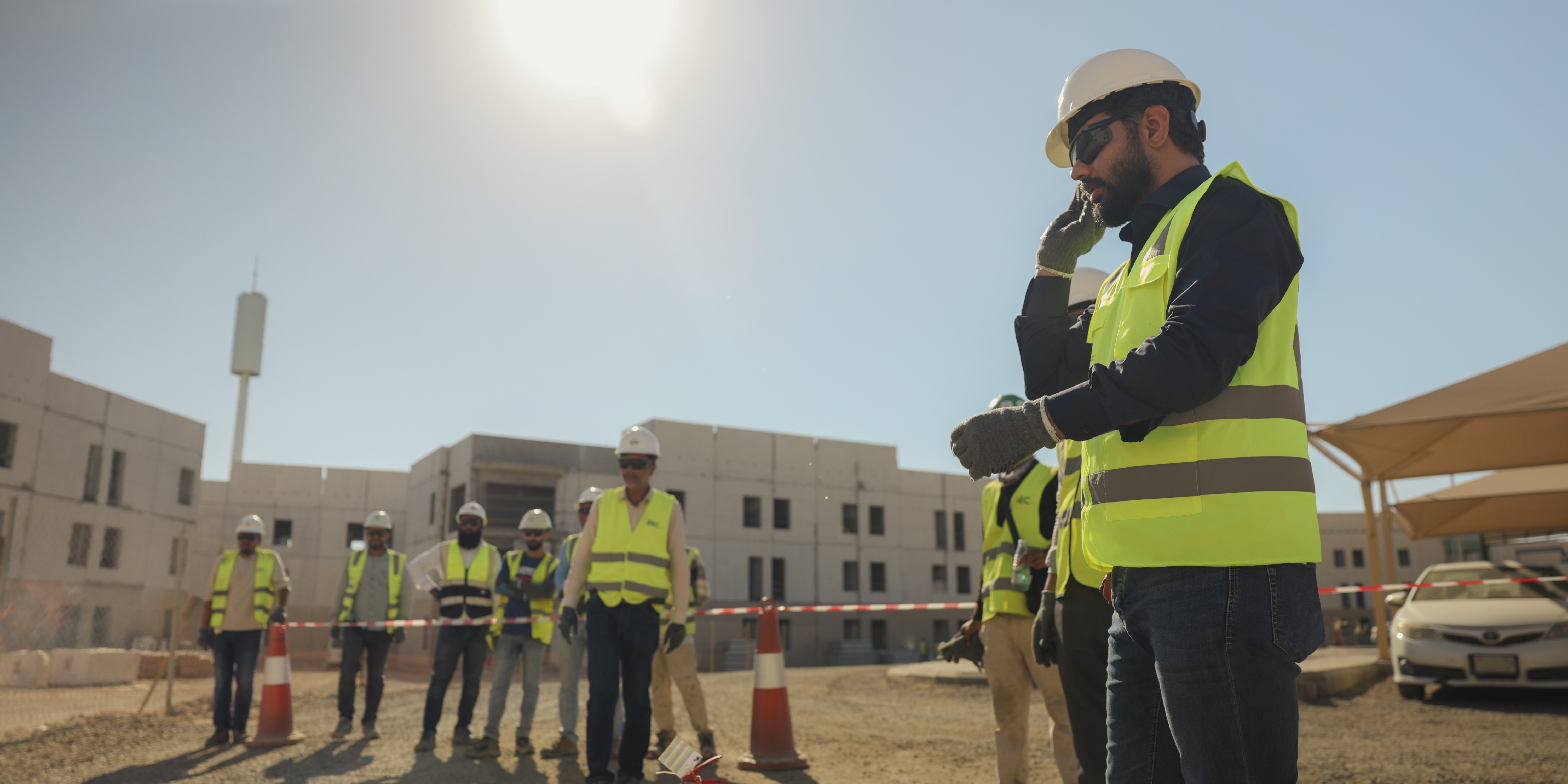
At BEC Arabia, safety is embedded across the full project lifecycle—from planning and mobilization to execution, review, and closeout. Through daily toolbox talks, structured training programs, leadership site presence, routine inspections, and clear accountability, safety remains dynamic and responsive to changing site conditions.
A System Designed Around People
What sets BEC Arabia apart is not only the robustness of its systems but the depth of its commitment to people. Safety extends beyond preventing incidents, it also includes protecting physical and mental well-being.
Comprehensive training programs ensure that every individual is equipped with the knowledge to work safely, while continuous learning initiatives keep teams aligned with evolving risks. Employee participation is actively encouraged through simple but effective tools like anyone can raise an observation and open communication channels, creating a culture where concerns are raised and addressed without delay.
At the same time, well-being is treated as an essential part of safety. From fatigue management systems and health surveillance programs to on-site welfare, the organization recognizes that a safe worker is not only protected but also supported. This holistic approach ensures that safety is not limited to compliance but extends to care.
From Achievement to Consistency
Over the years, BEC Arabia has reached significant milestones, millions of safe working hours, award-winning safety initiatives, and recognition across the industry. However, these achievements are not viewed as endpoints. They are indicators of something more important: consistency.
They demonstrate that when leadership is committed, systems are strong, and people are engaged, safe outcomes are not exceptional, but they are repeatable.
A Culture Built on Care
Ultimately, safety at BEC Arabia is not defined by procedures, certifications, or awards. It is defined by a shared understanding that every action, every decision, and every precaution is taken for one reason: to protect people.
On this World Day for Safety and Health at Work, the message is clear:
Safety is not built through rules alone. It is built through leadership, discipline, and people who care enough to act.
Because at the end of every project, beyond every milestone and deadline, the only result that truly matters is that everyone goes home safely.
Asif Kamal Khan
OHS Assurance Manage